How to Pay Off a Personal Loan Early (and When You Shouldn’t)

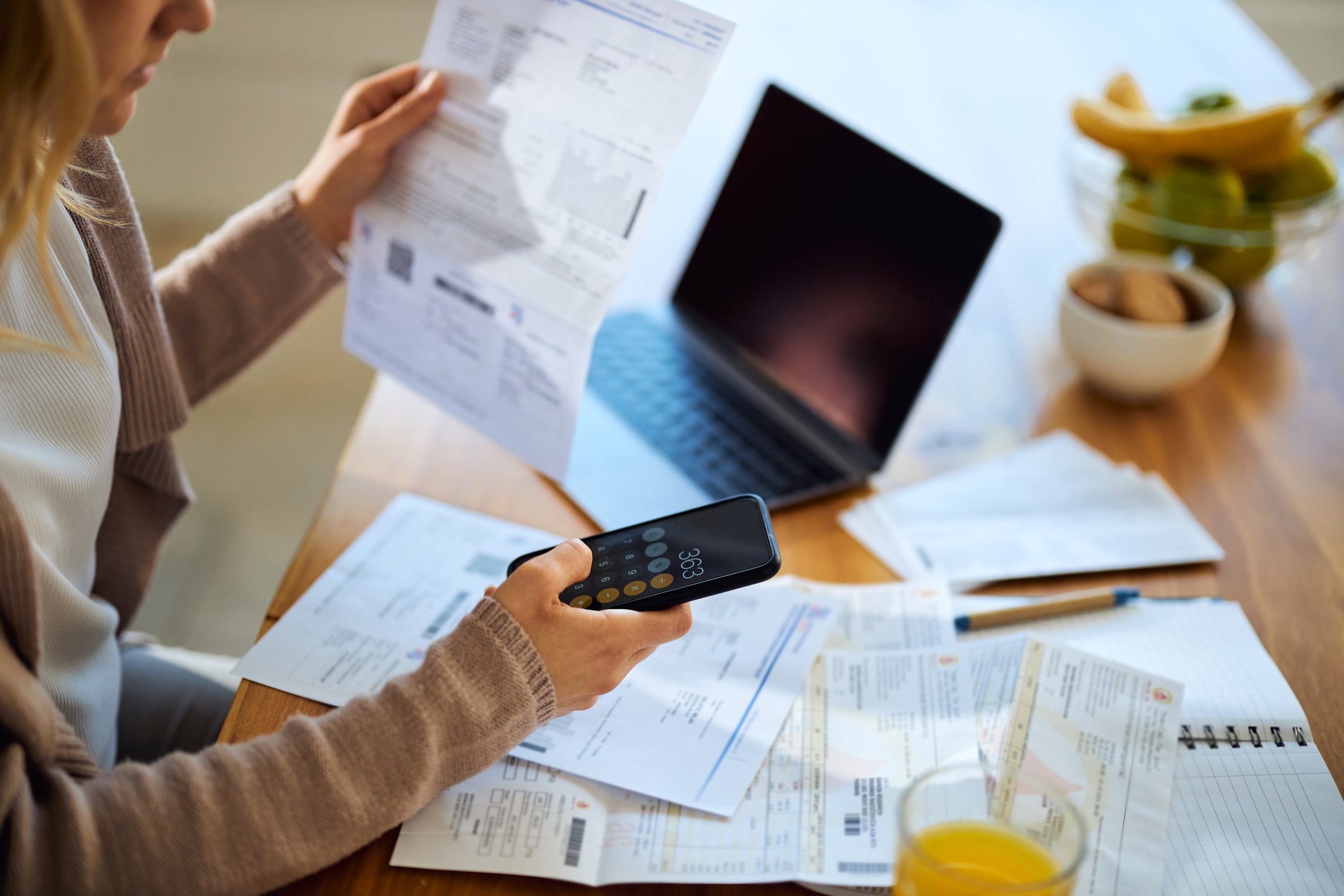

If your budget is spread thin trying to keep up with bills, you might benefit from paying off a personal loan early. It’s common for debt payments to eat into Americans’ take-home pay. In fact, for 32% of respondents of The Penny Hoarder’s 2026 State of Debt survey, debt payments are taking up 10% to 25% of their paychecks and for 1 in 5, it’s 26% or more.
It might seem counterintuitive to pour more of your hard-earned income into paying off a loan, especially if it might result in a prepayment penalty. However, there are a lot of benefits you may not have considered. When you pay off a personal loan faster, you can save on interest, reduce monthly payments and improve your credit score.
When paying off a personal loan early, you should have a strategy in mind and a plan for your payments. Find out more about why an early payoff strategy is beneficial, how to do it effectively and how to avoid prepayment penalties along the way.
Can You Pay Off a Personal Loan Early?
In almost all cases, yes, you can. Aside from the obvious benefit of no more monthly payments, there are other benefits to paying off a personal loan early. Once you pay off the loan, you’ll have more financial freedom, a (hopefully) better credit score and you’ll save on interest.
One thing to watch out for, however, is a prepayment penalty. Companies charge this fee because the earlier you pay off the loan, the less interest you pay. That means they’re losing money. Even though these fees don’t mean you can’t pay off the loan early, it’s designed to discourage you from doing so.
If you want even more help paying off debt, check out our favorite debt payoff strategies.
Pros and Cons of Paying Off a Personal Loan Early
Pros
- Save on interest
- Eliminate a monthly payment, which frees up more of your budget
- One less financial matter to keep track of
- Lower debt-to-income ratio
- Credit score boost from lowering DTI
Cons
- Possible prepayment penalty
- Depleting savings/emergency fund to put more money toward payments
- Closing an account can also cause a temporary credit score dip
How Paying Off a Personal Loan Early Affects Your Credit
How paying off a personal loan early could affect your credit can get a little tricky. It can both help it and hurt it at the same time.
Your credit mix makes up 10% of your score, according to Experian, and paying off your loan eliminates one of your accounts. Depending on how long ago you took out your loan, it might also affect your length of credit history, which accounts for 15%. But the amount you owe makes up more than both of those combined at 30%. And all those on-time payments that you (hopefully) made stay there even after you pay the loan off. That means that the minor and temporary negative effects on your credit score likely will be worth it long term.
What Is a Prepayment Penalty?
The prepayment penalty is a fee lenders charge because you paying off your loan early causes them to lose out on interest charges. If a lender charges a prepayment fee, they must include in the disclosures of a loan agreement, as mandated by the Truth in Lending Act. Check if your lender charges one and how much it is before you pay off your loan early. Even though it could be worth the extra cost, you don’t want to be shocked by the amount or not be able to pay it. You may even be pleasantly surprised to find your lender doesn’t charge one.
The fee may be charged as a percentage, like 1%-2% of your outstanding loan balance. So if your outstanding balance was $5,000 and the prepayment penalty is 1%, you’d owe an extra $50. Or, it may be a flat fee that’s the same regardless. Whether you owe $1,000 or $10,000 when you pay, you’re paying $200.
The good news is that these fees aren’t as common as they used to be. You’re more likely to see them on things like car loans and non-government backed mortgages. Still, it’s a good idea to check before you commit to paying your loan off sooner.
How to Pay Off a Personal Loan Early: 6 Methods
These strategies can get you to the end of your loan sooner rather than later.
1. Make Extra Payments
Sometimes paying off a personal loan early is as simple as making extra payments when you can. Just make sure your lender applies any extra payments toward your principal (not your interest). It’s good to have a monthly goal in mind, but life happens, and sometimes an extra payment isn’t feasible. Even small payments can make a big difference over time.
If you’re not sure you can fit this in your budget, use an app like Rocket Money (or one of our other favorites) to see how it shakes out.
2. Biweekly Payments
You can also work with your lender to start making biweekly payments to your personal loan instead of monthly payments. By making a payment every two weeks, you’ll end up making 26 payments throughout the year, because some months are longer than others. This amounts to one extra (monthly) payment each year, without making a huge dent in your budget.
3. Round Up Your Payments
One of our favorite tips to pay off a personal loan fast is to round up your monthly payments to the nearest $50 or $100. For example, if your lender requires you to pay $426 each month, you could tell them to actually take out $450 or $500 each month instead. This is a simple way to add more to the pot without stressing over huge additional payments.
4. Use Windfalls
We know the last thing you want to do with your tax refund is pay off a loan, but applying extra cash that comes your way to your principal can really help speed up the process. Work bonuses, holiday cash gifts, insurance refunds and other financial windfalls can be great opportunities for lump-sum payments.
5. Refinance to a Shorter Term
One of the best ways to pay off a personal loan quickly is through refinancing. If you can secure a lower interest rate over a shorter period of time, you can focus on paying off your loan balance fast. This option may not make sense if you don’t have the money for an origination fee or an increased monthly payment, but if you do, refinancing can be super helpful.
6. Apply Payments to the Principal
As mentioned above, always make sure to specify that any extra payments you make will be going toward your principal. The principal is the amount you borrowed initially, not including the cost of interest. If your extra payments go toward interest, you may not shave off any time in your loan repayment.
A Quick Worked Example
Want to know how fast you can pay off your loan, and how much you’ll really save in the process? Let’s take a look at an example.
If you have a $10,000 personal loan with 8% interest and a 5-year term, you will pay $2,165.84 in total interest. If you pay off that same loan in three years instead of five, you would only pay $1,281.09 in total interest. That’s almost $900 in savings!
As a general rule, you can figure out how much interest you’ll pay monthly by dividing your interest rate by the months remaining in your loan term, then multiplying that number by your loan’s current balance.
Interest Rate➗ Months in loan term x Balance = Monthly Interest.
When the number of months in this equation or the loan balance decreases, your monthly interest cost also decreases.
Should You Pay Off Your Personal Loan Early? A Quick Checklist
Paying off your personal loan early may be the right move if:
- There’s no prepayment penalty (or the penalty is smaller than the interest saved)
- You have a healthy emergency fund
- You have no higher-interest debt
You should hold off if:
- You’d drain emergency savings
- You carry higher-interest debt (pay that first)
- You’re about to apply for a mortgage/car loan (potential credit score dip)
If you decide to pay it off early, it won’t always go according to plan. If things start to feel tight, reevaluate your budget to give yourself some breathing room. Conversely, if you feel like you could be paying more, it’s worth reevaluating the budget for a faster payoff as well.
If you’re determined to pay off your personal loan faster, you can save a lot of money on interest, improve your credit score and find more financial freedom. Choosing a payment plan and sticking to it can be difficult, but the rewards are worth it.
Frequently Asked Questions
It can cause a small, temporary dip, but the effect is usually minor. Paying off the loan closes an active installment account, which can slightly reduce your credit mix and the average age of your accounts. Your positive payment history stays on your credit report, though, and any dip typically recovers with continued good habits. The one time to think twice is if you’re about to apply for a mortgage or car loan and need every point — in that case, you might wait until after the new loan closes.
No. Prepayment penalties on personal loans have become uncommon, and many lenders specifically advertise that they don’t charge them. That said, some still do — particularly certain subprime lenders or loans that use precomputed interest. The only way to know for sure is to check your loan agreement, where any prepayment fee must be disclosed. If you’re not sure, ask your lender directly before making extra payments.
It depends on your safety net and your other debts. Financial pros generally suggest keeping an emergency fund of a few months’ expenses before throwing extra cash at a loan and paying down any higher-interest debt (like credit cards) first because that saves you more. If your emergency fund is solid and the personal loan is your most expensive debt, putting extra money toward it is often a smart move. If not, shore up savings or tackle the pricier debt first.
The simplest ways are to make extra payments toward your principal, switch to biweekly payments so you make the equivalent of one extra payment a year, round up your monthly payment, or apply a windfall like a tax refund as a lump sum. Refinancing to a shorter term can also speed things up. Whichever method you choose, confirm with your lender that extra payments are applied to your principal balance rather than toward future interest.